
Cybersecurity Basics for Independent Retail: How to Protect Your Business
Wed May 13 2026
- Business Advice
During our spring 2026 PrimeTime in Fort Lauderdale, Nationwide Marketing Group (NMG) Vice President of Technology, IT and Development, Bryan Aller presented on a topic that impacts every independent retailer.
Cybersecurity.
As part of the Nationwide Learning Academy (NLA) series of sessions hosted during PrimeTime, Aller addressed this topic of cybersecurity with the goal of helping members “protect your business.”
If you weren’t able to attend the full session in Fort Lauderdale, keep reading for an overview that includes what you need to know about cybersecurity, how to proactively protect your business, and how to react if you spot an attack.
Fundamentals of Cybersecurity
In the most basic terms, CYBER refers to your data, housed in systems, networks, and programs.
SECURITY is protection from issues like unauthorized access, misuse of sensitive information, the changing or destroying of data, extortion or exploitation, interruption to your business, and more.
Types of Cybersecurity Attacks
While this is not an exhaustive list, here is a look at some of the most common forms of attack used by today’s cyber criminals.
- Phishing and spear-phishing
- Password attacks
- Session hijacking
- Web attacks
- Malware attacks
- Supply chain attacks
- Cloud-based attacks
Let’s look at phishing and spear-phishing in more detail.
Phishing vs. Spear-Phishing and Recognizing the Signs
- Phishing attempts are high-volume messages with low success rates.
- Spear-phishing attempts are personalized messages with high-value targets. While less common than phishing, spear-phishing can be more successful.
Signs of Phishing
Review these common phishing indicators to help you recognize and avoid these attacks.
- Sense of urgency — meant to trigger an action
- Grammar and spelling issues — uncommon for a reputable organization, although this is becoming a less reliable indicator with increased use of AI to generate phishing content
- Request for sensitive information — in a way that feels out of the norm
- Unusual or unexpected request sent from an authoritative or familiar source
Before clicking any links, determine whether you can check the legitimacy of the information or source in a different way. This could look like:
- Evaluating the sender’s email
- Hovering over the link to see the URL
- Contacting the sender via a different method (ex. text message or phone call)
Why You Should Care About Cybersecurity
According to IBM, the average cost of a data breach is about $4 million. Following a cyberattack, 60 percent of small businesses close their doors within six months. Even more alarming, most companies take over six months to even notice hacker activity.
Aside from causing financial distress to your business, cyberattacks can also impact your customers’ data, your reputation, and your legal obligations.
The good news is, in most cases, you can avoid being a victim of a cyberattack. Statistics show that nearly 95 percent of all data breaches are linked to human error.
So what can you do?
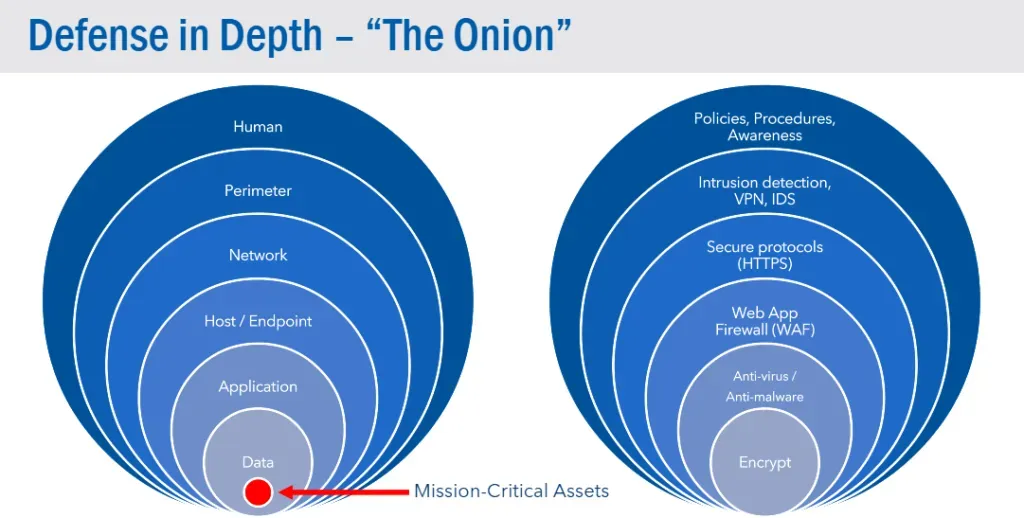
Start by completing training and implementing policies and procedures to create a security-focused culture in your workplace.
Additional Resources and Best Practices
According to the Cybersecurity and Infrastructure Security Agency (CISA), here is a list of best practices to start with:
- Keep software up to date, including antivirus software
- Change default usernames and use strong passwords (don’t share them!)
- Implement multifactor authentication (MFA)
- Install a firewall
- Be suspicious of unexpected e-mails
- Avoid using unsecure Wi-Fi in public places
- Make sure website addresses begin with “https:” instead of “http:” to ensure your information is being encrypted
CLICK HERE to learn more about the Nationwide Learning Academy (NLA).
Related Articles