
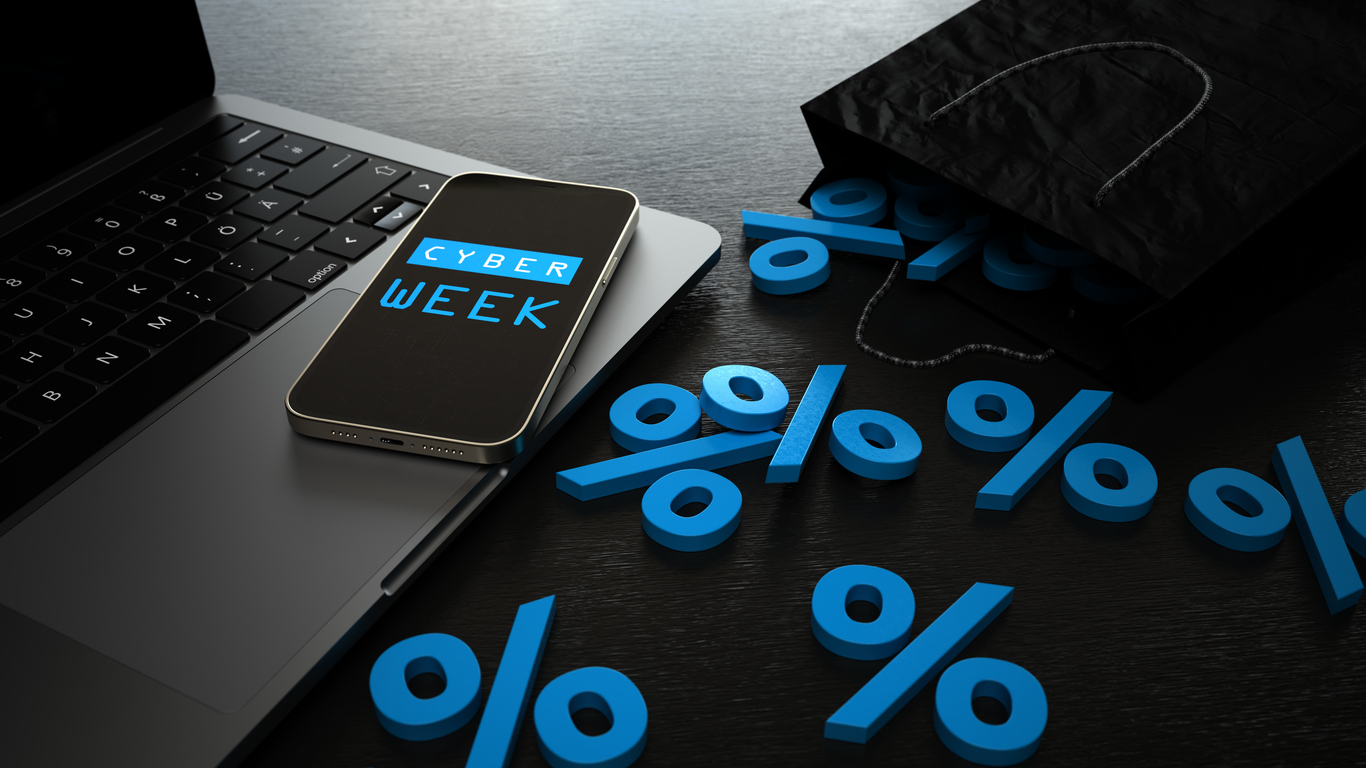
Results are in for retail performance over the five-day period that includes Thanksgiving Day and Cyber Monday, also known as Cyber Week. And while this period remains a key indicator for overall seasonal performance, it’s no secret that Black Friday sales continue to creep earlier into November.
In fact, the National Retail Federation (NRF) officially considers the “holiday season” to be November 1 through December 31, and current NRF predictions have total holiday spend hitting $1 trillion for the first time. While the final tally is still weeks away, a large share of the total typically comes from transactions during Cyber Week. But, before we look at broader consumer behavior and overall spend across these five days, let’s focus on the independent channel.
How Independent Retailers Performed Over Black Friday
Nationwide Marketing Group (NMG) recently released its exclusive Black Friday PriMetrix Recap, highlighting the results of the 2025 Black Friday promotional window, extending from November 5 to December 3.
Here are several key insights from the report.
- NMG members saw a decrease in both dollars (-6.7 percent) and units (-11.4 percent) YoY.
- Two external factors that contributed heavily to these decreases: aggressive competition and consumer sentiment.
- The period’s top sell-out volume day was Friday, November 28.
For more information on specific appliance category performance and comparisons to the industry, click here to access* the full 2025 Black Friday PriMetrix Report. *MemberNet login required.
And now, let’s zoom out for an overview of holiday performance across all retail segments.
Online Sales Drive Black Friday, Cyber Monday Growth for U.S. Retailers
According to a survey released by the NRF, a record 202.9 million Americans went shopping online and in-store during the five-day stretch from Thanksgiving to Cyber Monday.
Online shoppers led the surge with $44.2 billion spent in just five days, per Adobe data. Black Friday, specifically, saw a 9.1 percent increase year-over-year (YoY) with $11.8 billion spent. And Salesforce reported a 6 percent YoY increase on Cyber Monday with online sales totaling $13.6 billion.
Top Cyber Monday categories included electronics (up 12.8 percent YoY) and furniture (up 5.4 percent YoY). Average discounts for each category were 19 percent, respectively.
Three Key Contributors to Online Sales During Cyber Week
AI Use Increases Retail Traffic
AI continues to dominate the retail conversation this holiday season. Both Adobe and Salesforce attributed major e-commerce activity to AI-powered tools. “This holiday season proves that AI is no longer a tool for just cost-cutting—it’s a massive revenue engine,” Caila Schwartz, Director of Consumer Insights at Salesforce, shared with Forbes.
And here are the numbers. For Black Friday, Adobe results showed AI-driven traffic up 805 percent YoY, and Salesforce credited AI with $3 billion in U.S. online sales. On Cyber Monday, AI traffic was up 670 percent YoY, per Adobe.
BNPL Helps Convert Cyber Sales
Another Cyber Monday boost came from a 4.2 percent YoY increase in buy now, pay later (BNPL) purchases, which led to $1.03 billion in online sales on that day alone.
Shoppers Prefer Mobile on Cyber Monday
For the second consecutive year, “mobile remains the most popular way for online shoppers to browse and buy on Cyber Monday,” with a YoY increase of 16 percent.